


The diagnosis of “cervical spondylosis” is identified in more than 25% of cases of disc degeneration;Its characteristic symptoms and treatment should be considered in as much detail as possible.It is known that symptoms of the disease are often detected in people aged 35-40, however, currently the age of patients with this disease is clearly decreasing.
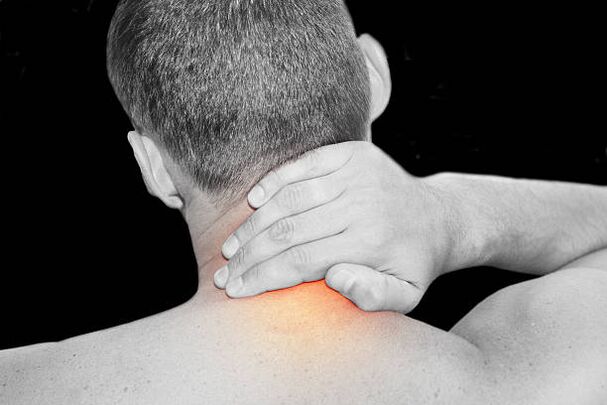
To get rid of cervical osteonecrosis and its consequences, conservative methods allow you to: eliminate disorders in the functioning of the spinal roots, neutralize the accompanying pain and prevent further development of degenerative changes in a specific part of the spine.If non-surgical methods are considered ineffective and there are special indications, the patient is referred for surgery.The amount of intervention is determined by the degree of neglect and clinical manifestations of the disease.
With the help of conservative treatment methods, you can get rid of the manifestations of cervical spondylosis in 1-3 months.Recovery after surgery will take about a year.Pain syndrome can be relieved as quickly as possible with the help of physiotherapy procedures and special exercises.To accelerate the results, the patient's own positive attitude, focus on healing, patience and perseverance are extremely important.On this path, the help of experts is needed.Therefore, the highest effectiveness of treatment and rehabilitation can be achieved only in a modern medical clinic, equipped with the latest technology and using the latest methods in the fight against diseases of the musculoskeletal system.
Conservative complex treatment methods include:
- Physical therapy.This method is a set of processes that use physical factors: magnetic fields, low-frequency currents, ultrasound, etc.This effect allows you to shorten treatment time and increase effectiveness, neutralize pain and stop inflammatory processes.
- Reflexology.This technique involves influencing active areas and acupuncture points using special methods.It allows you to enhance basic treatment and activate the body's self-healing system.
- Therapeutic exercises.This method consists in creating nerve root decompression using dosed loading during exercise on special equipment.It allows you to improve the nutrition of the intervertebral discs, normalize metabolism and blood circulation, increase the distance between the vertebrae in a certain part and reduce the load on the spine.
- Handling traction.This procedure involves traction of the cervical vertebrae to increase the distance between the vertebrae, reduce inflammation, reduce pain and reduce pressure on blood vessels.
- Massage therapy.The procedure is performed manually by a highly qualified specialist.A set of techniques used that aim to reduce muscle tension and work to increase overall strength.
- Treatment with medication.The use of the drug is indicated if there is an exacerbation of cervical spondylosis.To enhance the body's metabolic processes, the prescribed medication is taken orally or injected.
Despite the fact that each of the described methods has proven its benefits in the fight against degenerative processes in the intervertebral disc, a long-term effect can only be achieved if they are used comprehensively.It is very important to use specialized rehabilitation equipment to restore the entire muscle.
Treatment of cervical spondylosis in women requires special consideration.According to statistics, 2/3 of people with this disease are women.The tendency is associated with frequent changes in hormone levels and a more fragile spinal bone structure.Treatment of cervical spondylosis in women should be prescribed taking into account age, the presence of symptoms of cardiovascular disease and the state of the endocrine system.
Causes of osteoarthritis
It is believed that the main cause of cervical spondylosis is the insufficiently active lifestyle of office workers and the elderly.However, lack of physical activity is not the only reason for the appearance of this disease.Nowadays, even young people are not immune from manifestations of the signs of the disease, and the number of elderly patients is increasing.The development of the disease can be facilitated by injuries to the back, frequent dynamic loads and other factors.Here is their list:
- genetic predisposition (heredity);
- intoxication of the body;
- infection;
- age-related changes;
- unfavorable environmental conditions;
- excess body weight;
- trace element deficiency due to poor nutrition;
- broken bones and bruises of the spine;
- instability of the cervical vertebrae (hypermobility);
- flat feet;
- curvature of the spine (scoliosis);
- abnormal development of the cervical spine;
- incorrect posture;
- uneven development of the skeletal and muscular system;
- wearing tight and uncomfortable shoes, high heels that are too high;
- prolonged exposure to a stressful situation;
- suddenly stopping regular exercise;
- smoke;
- nervous tension;
- hypothermia;
- foot disease.
People who often do heavy labor often suffer from cervical spondylosis;Symptoms can appear quickly and treatment must be started immediately.Causes of the disease are: lifting heavy objects, jerky movements, frequent bending, stretching, and rotation of the body.Pressure on the intervertebral discs also increases with prolonged exposure to unnatural positions in any position - standing, lying, sitting.Sharp transitions to active exercise, especially those that involve moving heavy objects, can also lead to cervical spondylosis.To prevent this from happening, doctors recommend starting to increase the load gradually and under the supervision of an experienced trainer.
It is worth noting that the disease that develops in the cervical spine is considered the most dangerous type of disc dystrophy.It leads to compression of nerve endings exiting the spinal cord and causes a stroke.Therefore, people at risk for the above reasons should pay attention to their health even if they have only mild impairment and contact an experienced specialist if they suspect the disease.
Degree of development of osteoarthritis of the cervical spine
If a patient is confirmed to have cervical spondylosis, the doctor must rely on the totality of symptoms to determine the stage of the disease and prescribe effective treatment.Diagnostic MRI or radiographic examination of the area in different projections is required.During development, the disease goes through four stages.Let's take a closer look at them.
Osteonecrosis of the first degree is diagnosed in the preclinical stage of the disease.At this time, the disease is in the early stages of development but the patient can already feel its symptoms.First of all, he begins to feel a slight pain in his neck, which becomes stronger if he turns his head.In this part of the spine, at this time, the elasticity of the cartilage-like plates is lost and compaction occurs.Patients may notice that their neck muscles begin to fatigue quickly even with light loads.Treatment at this stage is usually medication to reduce swelling.
The second degree of cervical osteochondrosis is diagnosed when the disease begins to spread and progress in new areas.During this period, destructive changes in the spine begin - the intervertebral discs become thinner and the vertebrae move closer to each other, compressing the roots of nerve fibers.The patient complained of quite severe pain in the neck.Weakness, general malaise, and headaches were also noted.
Due to frequent exacerbations, a person with cervical spondylosis that has progressed to this stage may develop “head drop” syndrome.It is characterized by almost constant pain, which can only be eliminated by supporting the head with the hands and redistributing the load from the vertebrae.Treatment of the patient in this case includes not only taking prescribed medications, but also special procedures.
Third-degree osteochondrosis is a dangerous, complex form in which a person experiences constant severe pain in the cervical area, spreading to the shoulder or arm.The patient's X-ray will clearly show spinal stenosis and reduced distance between vertebrae.At this stage, a hernia may begin to develop, leading to loss of feeling in the hand.Other symptoms include: curvature of the cervical spine, pain when palpated, inability to hold the head, loss of skin sensitivity.With this disease episode, the patient is prescribed the same treatment as in the previous phase.If improvement cannot be achieved, surgery followed by rehabilitation is inevitable.
The fourth degree of the disease is diagnosed when the disc is almost completely destroyed and connective tissue forms in its place.During this dangerous period there is a high risk of arterial compression and disruption of the brain's natural nutritional processes.If this happens, along with constant pain and dizziness, the patient will periodically become disoriented in space.
Separately, it is worth mentioning the rehabilitation phase that occurs after surgery for herniated disc.Patients need to be supervised by a doctor and have regular checkups to prevent the condition from getting worse.During this period, it is necessary to create the most comfortable conditions for him so that the surgical area heals.Conservative supportive treatment is prescribed.
Symptoms of osteoarthritis
Many people do not know the importance of treatment immediately after detecting the first symptoms of cervical spondylosis.When the disease first begins to manifest, people often mistake it for a common illness.However, the problem will become more and more serious, endangering the entire human body.If the activity of the nerves and arteries in the neck is impaired, the brain will not be able to receive enough nutrition.This risks leading to constant pain, loss of coordination and impaired motor activity.Of course, such a life cannot be called complete.And if you ignore this disease, in addition to not being able to carry out normal activities, it can also lead to stroke, ischemia and many other diseases that seriously threaten life.
The structure of the cervical vertebrae is somewhat different from other parts of the spine, so signs of cartilage degeneration in this area are quite specific.The following signs indicate that you need to contact a specialist as soon as possible:
- Painful feeling.They can appear not only in the specified area, but also in the head, arms, shoulders and other parts of the body.This is explained by compression of nerve endings and muscle spasms.
- General weakness, dizziness, malaise.Occurs when an artery is compressed, leading to difficulty in blood circulation in the cervical spine and disrupting the brain's nutritional process.
- Weakness in the arm.Occurs due to compression of nerves responsible for motor activity.
- Crunching and difficulty turning.They appear when the structure of the disc begins to change and dense connective tissue forms in its place.
- Reduced sensitivity in hands.The explanation is that the nerve is compressed.
- Impaired vision and hearing.These signs appear in the final stages of the disease, when blood circulation in the cerebellum is interrupted.
Among the clinical signs of the disease, several syndromes are distinguished:
- Koreshkovy.It manifests itself as severe pain in the neck area, spreading to the shoulder blades, shoulders or lumbar region.
- Vertebrates.Characterized by sharp pain in the temples and occipital region.
- Reflex.It is manifested by severe pain in the back of the neck, which increases with head movement.Pain may be localized to the chest and shoulders.
- Cardinal. This syndrome is often confused with signs of angina;It is quite difficult to diagnose it independently.Usually, a person who feels pain in the heart area will have an attack of pain and begin taking appropriate medications, such as nitroglycerin.Because these medications do not solve the problem, the situation can quickly get worse.
To determine the severity of the disease, just knowing the symptoms is not enough.To prescribe effective treatment, the doctor must collect detailed information about the patient: find out if any relatives have cervical spondylosis in the family, ask about the patient's occupational activities and lifestyle.This is followed by visual examination, palpation, computed tomography, cervical X-ray, MRI.
The situation becomes a bit more complicated when it comes to a subtype of the disease, such as cervical and thoracic spondylosis.It has vague symptoms, so it is quite difficult to accurately determine the disease - this can only be entrusted to an experienced specialist.As a rule, patients complain of dizziness, migraines in various areas of the head, lumbago in the neck, chest pain when coughing, shortness of breath, gray skin, increased heart rate, constant fatigue and mood changes.All this resembles the symptoms of vegetative dystonia or angina, so confusion can occur when making a diagnosis.
Treatment of osteoarthritis in a Greek center
The rehabilitation center provides treatment of cervical spondylosis in women and men using the most modern physiotherapy methods.The clinic is located in Greece, on the picturesque Halkidiki peninsula, washed by the waves of the Aegean Sea.A patient undergoing inpatient or outpatient treatment can easily combine it with relaxation on pearly beaches, walks in picturesque areas and interesting sightseeing excursions.And fresh sea air and ideal climatic conditions contribute to rapid recovery.
Thanks to the use of modern equipment, the diagnosis of stages of cervical spondylosis in the rehabilitation center is as accurate as possible - errors are completely eliminated.Treatment includes a series of procedures aimed at restoring connective tissue and elasticity of the intervertebral disc, reducing inflammation, relieving pain, normalizing metabolism and generally improving the patient's health.
A multidisciplinary team of experts provides quality care to patients at the center.To carry out professional rehabilitation until complete recovery, a series of physiotherapy procedures are used and robotic and computer equipment are used.The latest methods of treatment and recovery of cells damaged by cervical spondylosis, such as PRP therapy, are applied.The complex includes spinal traction and hydromassage.To quickly relieve pain in the affected area, highly effective therapy is used - physiotherapy methods based on the targeted impact of radio waves that are safe for humans.
The high quality of medical services at the clinic is combined with excellent living conditions in comfortable hotel-style rooms with everything you need.Experienced staff provide support and assistance to patients 24/7.
To get rid of pain, stiffness in the cervical spine and other consequences of osteoarthritis as quickly as possible, the patient must carefully monitor the quality of his diet.It is important that during the recovery period the body receives a sufficient amount of substances responsible for the synthesis of cartilage tissue.It is also necessary to limit salt intake, add fresh fruits and vegetables to the menu, and monitor the calorie content of dishes.At the rehabilitation center, experts will take care of your diet.You will be able to enjoy delicious dishes prepared by our chefs according to homemade Greek recipes, taking into account your diet.
The clinic has created all conditions for you to not only regain your previous quality of life but also rest comfortably.Immerse yourself in our beautiful library, playground and flower garden.No matter how long your treatment lasts, you will feel right at home.